



Cookies help us deliver our services. By using our services, you agree to our use of cookies.
What is Myopia?
What is Myopia?
The world's most common vision defect: understanding blurred distance vision.
A Growing Concern
Have you ever waved to someone on the street only to see them squinting with a furrowed brow, returning the greeting only when you are close? This is likely myopia (nearsightedness). This condition causes blurred distance vision and is currently the most widespread visual impairment, with estimates suggesting a significant increase in the coming years.
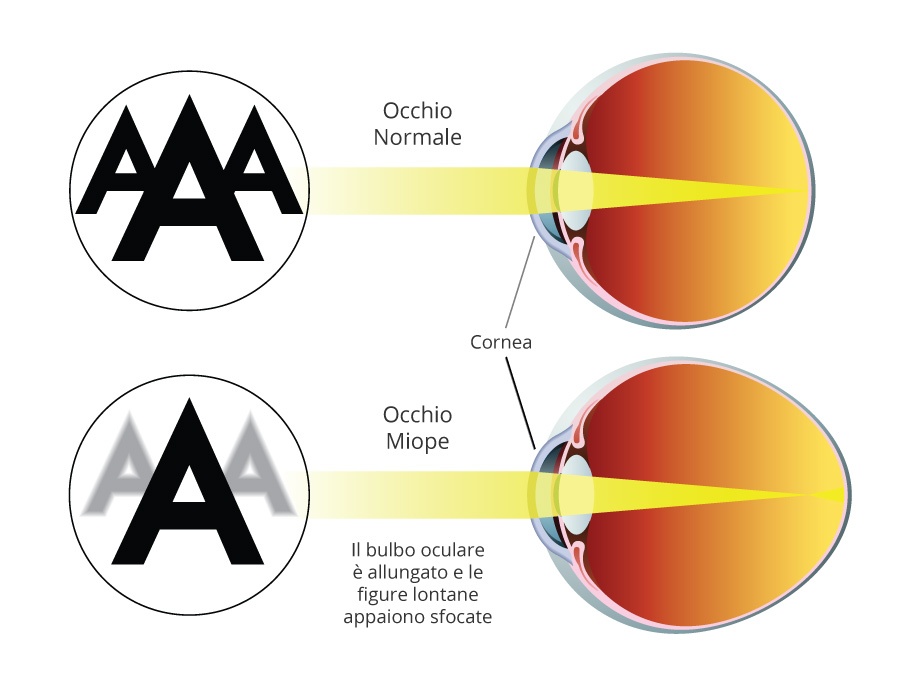
The Anatomical Cause: It is caused by an eyeball that is longer than normal. Images are not projected onto the retina but in front of it, resulting in a blurry appearance.
How Does a Myopic Person See?
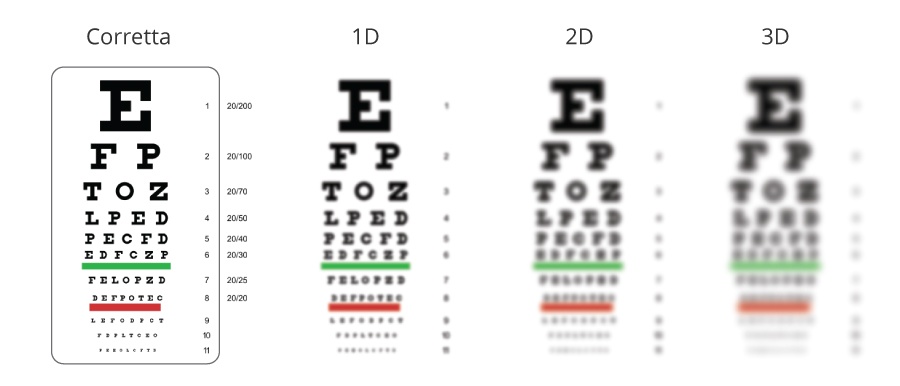
A myopic person sees very well up close, often even better than those without vision defects. However, the higher the myopia, the narrower the range of clear vision. There is a simple formula: 1 divided by the diopters of myopia gives the furthest point (in meters) that can be seen clearly without glasses.
Common Symptoms
Beyond blurred vision, here is what a myopic person typically experiences:
- Blurred distance vision
- Frequent squinting
- Eye strain
- Frontal or temple headaches
- Difficulty with night vision

How is it Corrected?
There are three primary ways to restore clear vision:
- Glasses: The classic solution, now a true style accessory. It is essential to choose thicker frames for high myopia to accommodate the lenses.
- Contact Lenses: Versatile and ideal for sports, they offer a wider field of vision without the "interruption" of a frame.
- Refractive Surgery: An invasive solution to permanently eliminate the defect (subject to medical evaluation).
Visual Hygiene: Slowing Progression
We can do a lot to prevent the advancement of myopia through "visual hygiene":
Natural Lighting
Correct Posture
Breaks Every 2 Hours
Outdoor Time
Balanced Diet
Pro Tip: Maintain a distance of at least 30-40 cm from books and screens. Spending at least 14 hours a week outdoors helps the retina due to the release of dopamine and Vitamin D from sun exposure.
Digital Screen Myopia
The excessive use of smartphones, PCs, and tablets is a major cause of the rise in myopia among young people. This forced "adaptation" to near vision compromises distance vision.
For those working on computers, contact lenses can be advantageous to reduce distortions. However, adequate tear film or the use of artificial tears is essential to avoid the dry eye syndrome typical of staring at screens for long periods.
